
Published 13 May 2026 · 3 min read
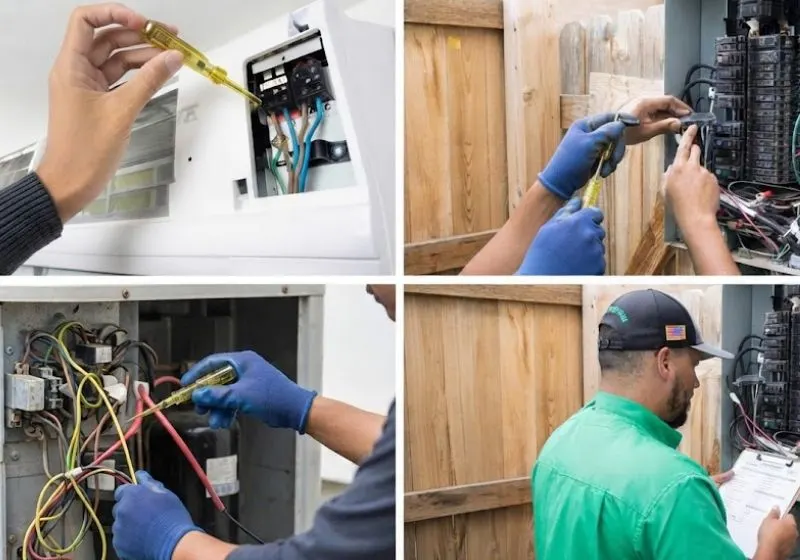
An AC that repeatedly trips the MCB is usually caused by an overloaded circuit shared with other high-power appliances, a failing capacitor or compressor drawing excess startup current, or a wiring/insulation fault — and it's a safety issue worth addressing quickly rather than just resetting the breaker each time.
Most repeated tripping traces back to one of these — a technician can usually narrow it down with a quick electrical check.
A breaker tripping is a safety mechanism doing its job — it's preventing a bigger electrical problem. Repeatedly resetting it without finding the cause risks wiring damage, compressor strain, or in worse cases, a fire hazard. If it trips more than once, treat it as worth investigating rather than an annoyance to work around.
Expect a check of the capacitor's condition, the compressor's current draw, the wiring insulation, and whether the AC is on a dedicated circuit or sharing load with other appliances. This is usually a fairly quick diagnostic, and it's worth doing before assuming the AC itself needs a major repair — sometimes it's simply an electrical fix, not an AC fault at all.
It can be, if left unaddressed — repeated tripping is often an early warning sign of an electrical fault that's worth diagnosing rather than ignoring.
Yes — a dirty coil forces the compressor to work harder and draw more current, which can be enough to trip a breaker that would otherwise handle the load fine.
Resetting it once to see if it happens again is reasonable, but if it trips repeatedly, that's the signal to call a technician rather than keep resetting it.
AC running but not cooling? Here are the 10 most common reasons in Hyderabad's climate, what you can check yourself, and when it's time to call a technician.
Read more →TROUBLESHOOTINGHow to spot AC gas leak symptoms early — hissing sounds, ice on the coil, weak cooling — before low refrigerant damages your AC's compressor.
Read more →TROUBLESHOOTINGAC water leaking from the indoor unit? Here's what usually causes it and a few DIY checks you can do before booking a repair.
Read more →Tell us the symptoms and your locality — we'll send a technician to diagnose it properly.