
Published 1 May 2026 · 3 min read
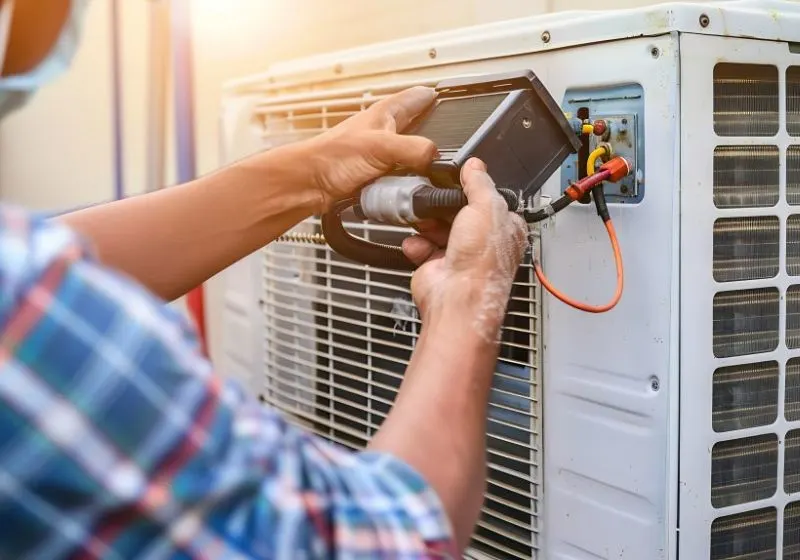
The most common reasons an AC runs but doesn't cool are a dirty filter or coil restricting airflow, low refrigerant gas from a slow leak, a blocked or dusty outdoor unit, or the AC set to the wrong mode. Most of these can be narrowed down in under five minutes before you call anyone.
Before assuming the worst, rule out the simple stuff. A surprising number of 'AC not cooling' calls turn out to be one of these easy fixes.
Once mode, temperature, filter and outdoor clearance are ruled out, the remaining causes usually point to something a technician needs to diagnose properly rather than something you can fix yourself.
Hyderabad's summer heat pushes ACs to run for longer stretches than most manufacturers design for casual daily use, which accelerates dust buildup on coils and puts more strain on ageing capacitors and compressors. A unit that coasted through mild weather with a dirty filter often reaches its breaking point exactly when you need it most — during peak March–June heat.
If you see ice forming on the indoor unit's coil or pipes, switch the AC off and stop running it in cool mode. This almost always points to low refrigerant, and continuing to run the unit in this state risks damaging the compressor. Switch to fan mode to let the ice melt, then get it inspected before using it in cool mode again.
This usually means either the refrigerant gas is low from a leak, the coil is too dirty to transfer heat properly, or the outdoor unit isn't getting enough airflow. A technician can usually tell which within a few minutes of inspection.
Yes — a heavily clogged filter restricts airflow across the coil enough to noticeably reduce cooling, and it's one of the easiest things to check and fix yourself before booking a repair.
It's usually fine short-term unless you notice ice on the coil, a burning smell, or the outdoor unit tripping the breaker — any of those mean you should switch it off and get it inspected rather than keep running it.
AC keeps tripping the MCB or circuit breaker? Here are the most common causes — from overloaded circuits to a failing capacitor — and what to do next.
Read more →TROUBLESHOOTINGHow to spot AC gas leak symptoms early — hissing sounds, ice on the coil, weak cooling — before low refrigerant damages your AC's compressor.
Read more →TROUBLESHOOTINGAC water leaking from the indoor unit? Here's what usually causes it and a few DIY checks you can do before booking a repair.
Read more →Tell us the symptoms and your locality — we'll send a technician to diagnose it properly.