
Published 15 May 2026 · 3 min read
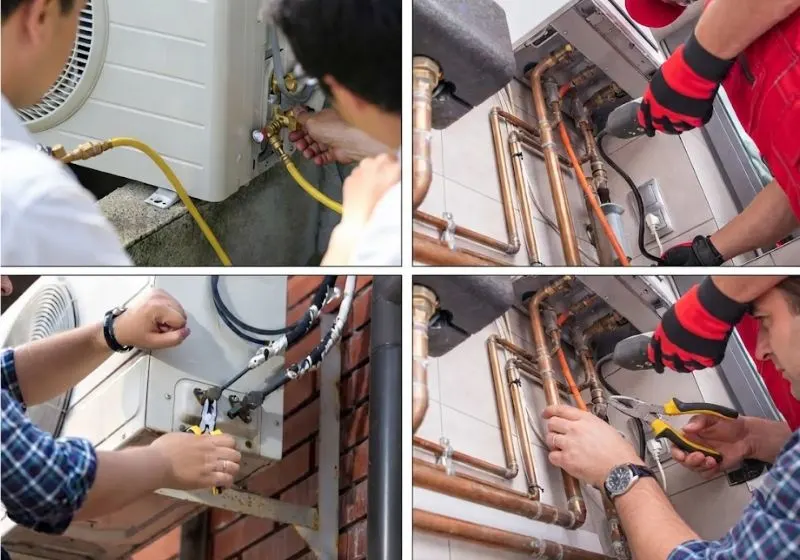
The clearest early signs of an AC gas leak are a hissing sound near the indoor or outdoor unit, ice or frost forming on the indoor coil, cooling that gets progressively weaker over days or weeks, and the AC taking noticeably longer to cool the room than it used to.
Each of these points to the same underlying issue — refrigerant escaping the sealed system — but catching it early makes a real difference to repair cost and to your compressor's lifespan.
Refrigerant doesn't just cool the air — it also helps cool and lubricate the compressor itself. Running an AC for extended periods with low refrigerant makes the compressor work harder while getting less of the cooling and lubrication it needs, which is one of the more common ways compressors fail early. Catching a leak in its early stages avoids this entirely.
Switch off cooling mode if you see ice on the coil, and get the unit inspected before running it in cool mode again. For the other symptoms, it's still worth booking a leak check sooner rather than later — a small, easily fixed leak today can turn into a bigger repair (or a compressor replacement) if it's left running for months.
No — a properly sealed AC system shouldn't lose refrigerant during normal use. Any gas loss points to a leak somewhere in the system that should be found and fixed, not just topped up repeatedly.
Yes, running an AC with low refrigerant for an extended period puts extra strain on the compressor and is a common cause of early compressor failure.
A technician pressure-tests the system to locate the leak point, seals or repairs it, then vacuums the line and recharges it with the correct refrigerant — simply adding more gas without this process just delays the same problem.
AC running but not cooling? Here are the 10 most common reasons in Hyderabad's climate, what you can check yourself, and when it's time to call a technician.
Read more →TROUBLESHOOTINGAC keeps tripping the MCB or circuit breaker? Here are the most common causes — from overloaded circuits to a failing capacitor — and what to do next.
Read more →TROUBLESHOOTINGAC water leaking from the indoor unit? Here's what usually causes it and a few DIY checks you can do before booking a repair.
Read more →Tell us the symptoms and your locality — we'll send a technician to diagnose it properly.