
Published 12 June 2026 · 3 min read
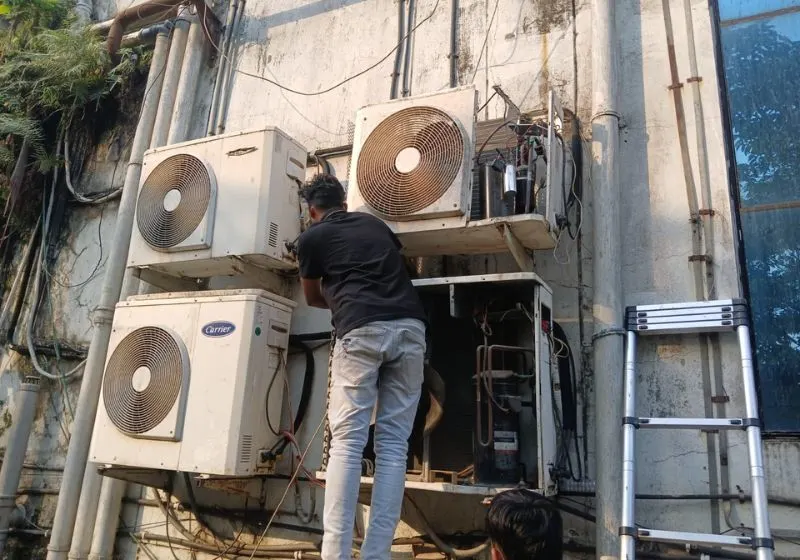
The outdoor unit's condenser coil is where the AC actually releases the heat it removes from your room — when it's covered in dust or blocked by poor placement, the whole system has to work harder to cool the same space, directly increasing both wear and your electricity bill.
It's easy to think of the outdoor unit as just 'the noisy box outside,' but it's doing the other half of the cooling process — rejecting the heat that was absorbed from your room. A dust-covered condenser coil can't release that heat efficiently, so the compressor works harder and longer to achieve the same indoor cooling.
Beyond dust buildup, where the outdoor unit sits matters more than people realize.
Periodic coil cleaning to remove dust and debris, checking that surrounding clearance hasn't been reduced by new plants or stored items, and confirming the unit isn't sitting in stagnant, poorly ventilated air. This is usually included as part of a standard AC service, but it's worth explicitly asking about if you've noticed reduced cooling despite a clean indoor unit.
Roughly yes — both experience dust buildup, though the outdoor unit is more exposed to dust, pollen and general outdoor debris, which can make it dirty faster in some environments.
A light cover to protect the top from direct rain pooling is generally fine, but fully wrapping or enclosing the unit restricts the airflow it needs to function and can do more harm than the rain would.
Yes — restricted airflow forces the compressor to work harder for the same cooling output, which shows up as higher electricity consumption over time.
How often should you service your AC in Hyderabad? A season-by-season guide for summer, monsoon and winter based on how the climate affects your unit.
Read more →MAINTENANCE TIPSSplit AC vs window AC maintenance compared — what's actually different in servicing, common faults, and which one costs more to keep running.
Read more →MAINTENANCE TIPSFoam jet, power jet, and dry AC service explained — what each one actually does, how they differ, and how to know which your AC needs right now.
Read more →Tell us the symptoms and your locality — we'll send a technician to diagnose it properly.